
What to know
For most of the Nara Period (710–794), Nara was Japan's capital, known as Heijo-kyo. The Heijo Palace, stretching about one kilometer wide and one kilometer long, housed the emperor's residence and government offices. Due to its immense historical and cultural significance, the palace grounds are part of the UNESCO World Heritage Sites of Nara.
Though the palace once stood as the majestic heart of the ancient capital, all original buildings have been lost except for one hall moved to Toshodaiji Temple in the 8th century. When the capital moved away from Heijo-kyo in 784, the palace and much of the city were abandoned as officials and citizens followed. The temples on the outskirts retained their importance, and Nara eventually grew around them, while the palace grounds were used only for rice fields.
In recent times, renewed interest in Nara's past has revitalized the area. The lack of development on the former palace grounds made archaeological research easy, and excavations have been ongoing since the 1950s. Visitors today still find a rural atmosphere, but the government has made great efforts to showcase the palace's history through reconstructions and museums.
Several major structures have been rebuilt in recent decades. The most prominent is the Former Audience Hall (Daigokuden), the largest building on the grounds, reconstructed for the 1300th anniversary of Nara's capital in 2010.
This grand hall was used for important ceremonies and meetings. Its ceiling is decorated with the four directional animals and the twelve zodiac animals. A throne sits in the center. It is called the "former" audience hall because it was replaced by the "latter" audience hall later in the Nara Period; the latter's foundations are visible to the east.
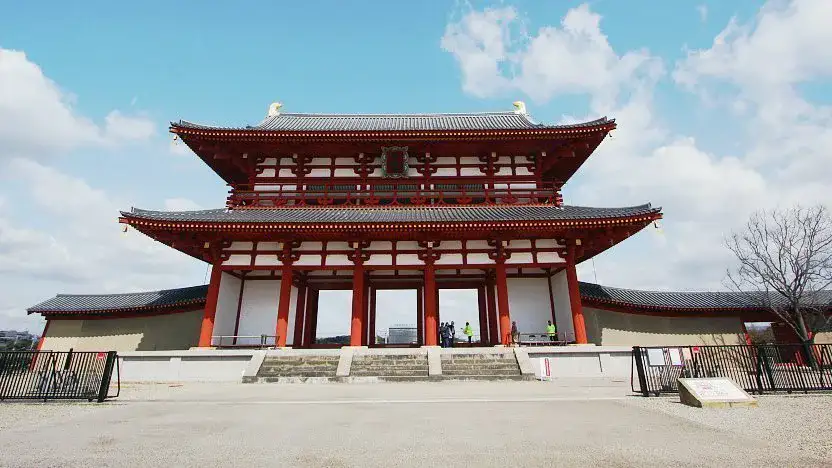
Three other full-scale reconstructions are the Suzaku Gate and Daigoku Gate—two gates leading to the audience hall—and the East Palace Garden (Toin Teien), featuring a pond, streams, and bridges, used by the imperial family for banquets. The offices of the Imperial Household Agency (Kunaicho) have also been partially reconstructed.
Visitor information
Practical details to check before planning this stop.
- Hours
- 9:00 to 16:30 (entry until 16:00)
- Closed
- Mondays (or following day if Monday is a national holiday)
- Admission
- Free
- English name
- Nara Palace Site Historical Park
- Original name
- Heijo Palace
Verify details before visiting. Currency conversion is indicative and may vary over time.