
What to know
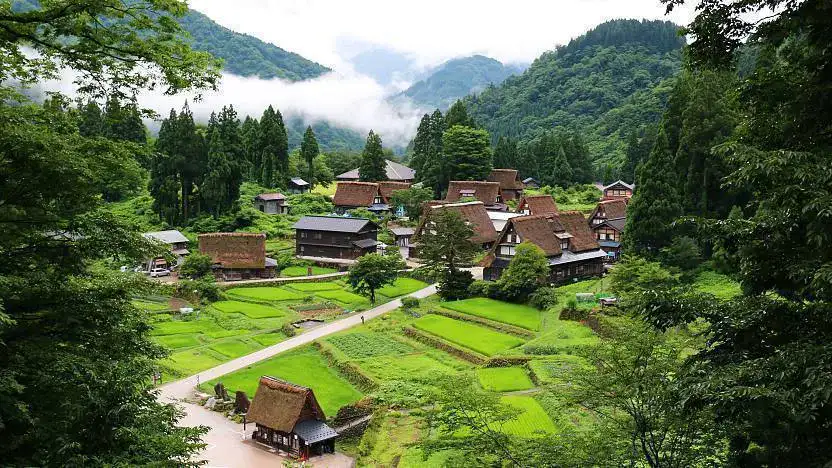
Nestled deep in the valley, Ainokura (相倉) is the most secluded village in the Gokayama region. It is also the largest, with nearly 20 gassho-zukuri farmhouses. Most are still private homes, but a few have been turned into restaurants, museums, and minshuku where you can stay overnight in a farmhouse.
Ainokura, along with Suganuma and Ogimachi, was designated a UNESCO World Heritage Site in 1995. Because it is less developed and harder to reach than Ogimachi, Ainokura is quieter and sees fewer tourists, yet offers similar attractions.
Due to its remoteness, Ainokura and the rest of Gokayama have preserved much of their traditional culture. This is evident in folk dances and music that feature unique instruments like the sasara, a string of over a hundred wooden clappers that is a regional symbol and popular souvenir.
The area around Ainokura is famous for washi paper. Legend says the paper-making technique was brought from Kyoto at the end of the Heian Period by survivors of the Taira Clan after their defeat by the Minamoto Clan. Several washi shops and workshops in and near Ainokura let you observe artisans and try making paper yourself.
Daytime visitors are asked to explore Ainokura only between 8:30 and 17:00 and to avoid the village in the early morning and evening.
Ainokura is a stop on the bus route between Shirakawago and Takaoka (see timetable). The one-way bus ride from Shirakawago to the "Ainokura-guchi" bus stop takes 45 minutes and costs 1300 yen. From Shin-Takaoka Station, it takes about one hour and costs 1000 yen.
Visitor information
Practical details to check before planning this stop.
- Hours
- 8:30 to 17:00
- Closed
- No closing days
- Admission
- 300 yen (~$1.92) (500 yen (~$3.2) for both museums)
- English name
- Original name
- Ainokura Village
Verify details before visiting. Currency conversion is indicative and may vary over time.