
Overview
Japan offers a vast selection of restaurants. While each establishment is unique, the following tips will help make dining out in Japan a smooth and enjoyable experience.
Entering the Restaurant
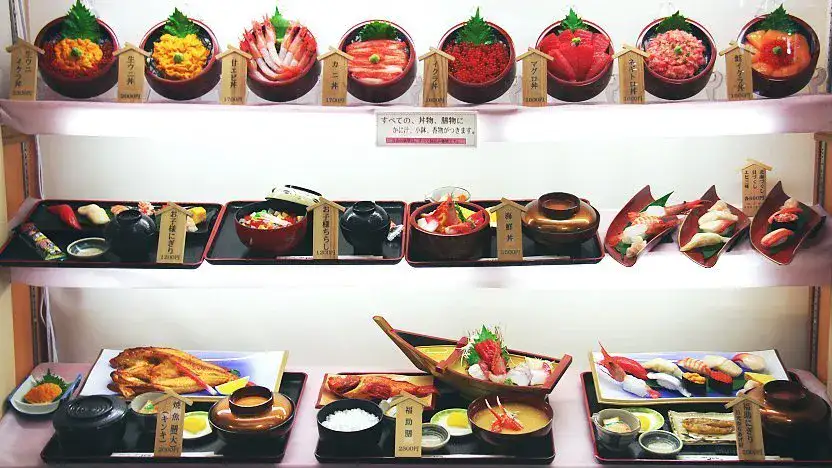
Many restaurants in Japan display plastic or wax replicas of their dishes in a window near the entrance. These replicas entice and inform patrons about the menu, offering an accurate visual description of the style and price of meals. They are especially helpful for foreign tourists who do not speak Japanese—if all else fails, you can go outside and point to what you want to order.
Upon entering, customers are greeted with "irasshaimase" (welcome, please come in). The staff will ask how many people are in your party and lead you to your table. Only rarely are customers expected to seat themselves.
While most restaurants have Western-style tables and chairs, low traditional tables with floor cushions (zashiki) are also common. Some restaurants offer both styles, and you may be asked which you prefer. For zashiki seating, remove your shoes at the entrance or before stepping onto the sitting area.
Smoking is generally prohibited in restaurants, but small establishments that predate the 2020 anti-smoking law may allow it if they display a sign at the entrance stating that smoking is permitted.
Ordering and Eating
After being seated, each diner usually receives a free glass of water or tea. If not served, free water or tea is often available for self-service. Everyone also gets a wet towel (oshibori) to clean their hands before eating. If chopsticks are not already set, you can usually find them in a box on the table. Most are disposable wooden chopsticks that need to be separated into two before use.
While many restaurants have illustrated menus, others may have only Japanese menus or display offerings on the walls. If you are unsure what to order or cannot read the menu, ask for recommendations (osusume) or the chef's choice (omakase). The latter often yields good prix fixe meals, but be adventurous and expect it to be pricier.
When ready to order, signal the staff by saying "sumimasen" (excuse me) or press the call button at the table. The waitress will often repeat your order back for confirmation.
Since the pandemic, ordering via a tablet, touch screen, or mobile phone after scanning a QR code has become common at many restaurants. These systems are often multilingual and illustrated, and some also handle payment.
At some restaurants, like izakaya, it is common for everyone to share dishes. At others, each diner is expected to order individually.
Paying
The bill is presented face down either with the meal or after you finish. In most restaurants, you bring the bill to the cashier near the exit when leaving, as paying at the table is uncommon. Cash is still widely used, but many restaurants also accept credit cards and IC cards like Suica.
Some restaurants, especially cheaper ones, have different ordering and payment systems. In many ramen and gyudon shops, for example, you buy meal tickets from a vending machine near the entrance upon arrival and hand them to the staff, who then prepare and serve the meal.
Tipping is not customary in Japan. If you tip, staff may chase you down to return the money. Instead, it is polite to say "gochisosama deshita" (thank you for the meal) when leaving.