
Overview
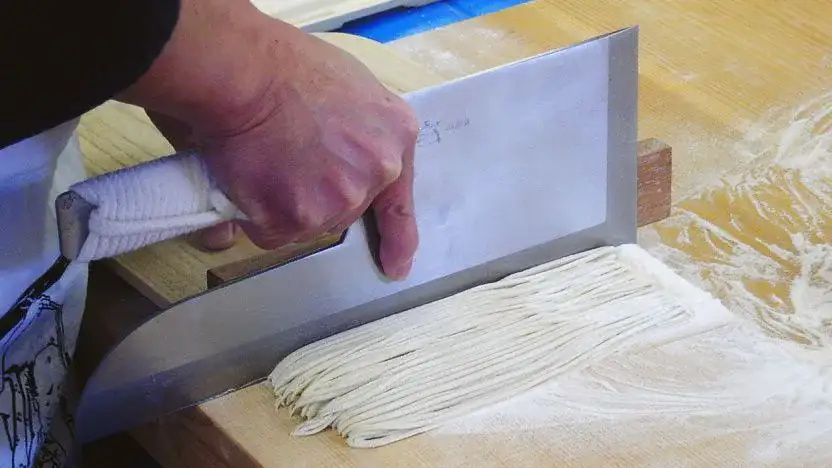
Soba (そば) noodles are made from buckwheat flour and are roughly as thick as spaghetti. They can be served in a variety of hot and cold dishes. Soba is widely popular and available throughout Japan. Since 100% buckwheat soba tends to be brittle, many restaurants add wheat flour to improve texture. The buckwheat content typically ranges from 40% to 100%, depending on the shop.
Note that some noodle dishes called "soba"—such as yakisoba, chukasoba, or Okinawa soba—are not actually made with buckwheat noodles. However, in most contexts, "soba" refers to buckwheat noodles.
The most basic soba dish is mori soba: cold boiled noodles served with a soy-based dipping sauce (tsuyu). Many soba dishes are enjoyed year-round, while others are seasonal. A special variety is Toshikoshi Soba, a symbol of longevity eaten on New Year's Eve.
Like pasta, dried soba noodles are available in supermarkets, but freshly handmade soba tastes best. Making soba by hand has long been a popular activity for both domestic and international travelers, offered by craft villages and tour companies.
Popular Soba Dishes
Soba can be served hot or cold. Below are some common varieties you'll encounter. Note that some dishes go by different names depending on the region.
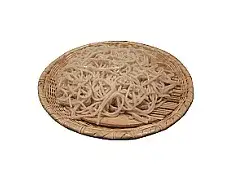
The most basic chilled soba, served on a tray with a simple cold dipping sauce (tsuyu) on the side. The sauce is typically a mixture of soup stock, water, and mirin. Historically, there were differences between zaru and mori soba, but today the main distinction is that zaru soba is topped with nori seaweed, while mori soba is not.
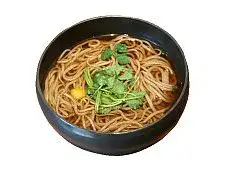
Soba noodles served in a bowl of hot, clear broth. The broth uses the same ingredients as the cold dipping sauce but in a lower concentration.
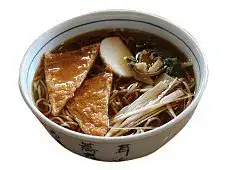
Kitsune Soba comes with a piece of aburaage (deep-fried tofu) on top. In Osaka, the same dish is called Tanuki Soba.

Tanuki Soba is topped with tenkasu, crispy bits of leftover tempura batter. In Osaka, this dish is known as Haikara Soba.
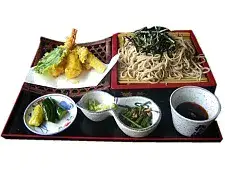
Served with tempura on the side or on top of the noodles. Typically includes three to five different tempura pieces, varying by shop. The noodles may be served on a tray (as shown) or in soup.
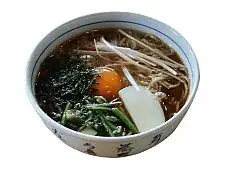
Tsukimi means "moon viewing," and this dish features a raw egg on top to represent the moon.
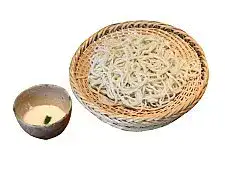
Tororo is a white, sticky cream made from grated raw nagaimo (yam). It is usually placed on top of the noodles or served on the side for guests to add.
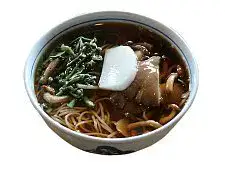
Sansai Soba features cooked sansai (wild vegetables) on top of the noodles in broth.
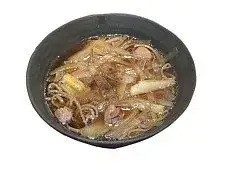
Nanban Soba typically has leek added to the broth. Most versions also include chicken or duck, reflected in names like Tori Nanban Soba (chicken) or Kamo Nanban Soba (duck).