
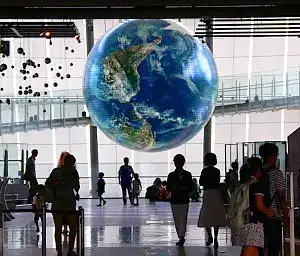
Japan boasts an impressive array of excellent museums covering a wide range of subjects, from religion, science, and history to geography and arts and crafts. You'll find museums dedicated to diverse interests throughout the country:
Below is a list of some of the best museums in Japan, sorted by category:
related places
32Kofukuji National Treasure MuseumMany temples in Japan have treasure houses of varying quality. Among them, the National Treasure Museum at Kofukuji Temple is arguably the best, despite its understated location and exterior—it's easy to overlook during a visit to Kofukuji. The museum boasts a great collection of Buddhist art, including the three-faced, six-armed Ashura Statue, one of Japan's most celebrated Buddhist statues.Traditional artNara National MuseumLocated in Nara Park, the outstanding Nara National Museum is an old-fashioned, highly educational museum focused on Buddhist statues. It displays a permanent collection of Japanese Buddhist art and religious artifacts and hosts annual exhibitions of treasures from nearby Todaiji Temple every autumn.Traditional artAdachi Museum of ArtThe star attraction of the Adachi Museum of Art is its beautiful garden, widely considered one of Japan's best. But the museum also houses an outstanding exhibition of Japanese paintings and tableware, most notably a large collection of paintings by Yokoyama Taikan.Traditional artKubota Itchiku Art MuseumThe Kubota Itchiku Art Museum presents a collection of outstanding kimono created with the highly labor-intensive tie-dyeing technique by Kubota Itchiku. The intriguing museum buildings and surrounding gardens further enhance the appeal of this museum near Mount Fuji.Traditional artNational Art Center TokyoThe National Art Center Tokyo (Kokuritsu Shin-Bijutsukan) in Roppongi is one of Japan's largest museums. It maintains no permanent collection but hosts excellent exhibitions that change periodically. The facility's futuristic building is part of the attraction.Traditional artMiho MuseumThe Miho Museum features structures of interesting designs integrated into the natural surroundings. The museum captivates with a theme of contrasting steel, glass, and warm stone, complemented by panoramic views of the surrounding valleys. Its exhibits consist of works from ancient civilizations such as the Egyptians, Romans, and various Asian cultures.Traditional artOtsuka Museum of ArtThe Otsuka Museum of Art is the largest museum in Japan. It houses a huge collection of life-size reproductions of Western art masterpieces from antiquity to the 20th century, including works by Michelangelo, El Greco, Goya, Monet, and Picasso.Traditional art21st Century Museum of Contemporary ArtAs its name suggests, the 21st Century Museum of Contemporary Art in Kanazawa features a variety of avant-garde artworks within a fascinating building of modern interior decor. It exhibits intriguing creations of acclaimed contemporary artists from Japan and around the world, and frequently hosts temporary exhibitions of recently designed art pieces.Contemporary artTeshima Art MuseumThe Teshima Art Museum is one of Japan's most intriguing contemporary artworks. Standing among terraced rice fields, the simple concrete structure stimulates visitors' senses with the play of water drops on a concrete surface. Its location on a rural island adds rustic charm.Contemporary artChichu Art MuseumThe Chichu Art Museum, designed by renowned architect Ando Tadao, is a very special modern art museum built mostly underground into a hillside overlooking the southern coast of Naoshima Island. The museum building itself is a work of art, cleverly using natural light to illuminate the artwork, creating a viewing experience heavily influenced by the surrounding natural environment.Contemporary artInujima Seirensho Art MuseumThe Inujima Seirensho Art Museum tastefully incorporates an art gallery into the ruins of a copper refinery. The gallery showcases a number of intriguing artworks, including a tunnel of mirrors.Contemporary artTokyo National MuseumThe Tokyo National Museum in Ueno Park houses one of the best and largest collections of national treasures and important cultural items in the country. Interesting temporary exhibitions are also held.HistoryEdo-Tokyo MuseumThe Edo-Tokyo Museum vividly illustrates the past of Tokyo (formerly Edo) and provides a good introduction to the metropolitan city we see today. In an interactive way, visitors can experience and learn about various aspects of earlier Tokyo, such as people's way of life, Edo Period architecture, cultural heritage, political climate, commercial situation, and more.HistorySengukan MuseumThe Sengukan Museum allows visitors to learn more about the periodic rebuilding of the sacred Ise Shrines. Located at the entrance of the Outer Shrine (Geku), the museum affords views of the elusive main shrine hall from a close distance. Its outstanding exhibits include a fourth of a 1:1 replica of the shrine's main building as well as a beautiful 1:20 model of the main sanctuary.HistoryUpopoy Ainu National MuseumThe foremost place in Japan to learn about Ainu culture, Upopoy opened in 2020 as the first national museum dedicated to the history and culture of the Ainu, the indigenous people of northern Japan. It is surrounded by a lakeside park featuring reconstructed traditional Ainu houses and facilities to experience Ainu culture.HistoryHiroshima Peace Memorial MuseumThe Hiroshima Peace Memorial Museum reflects on the dropping of the bomb in 1945 and its outcome in human suffering. The personal details displayed are quite upsetting, serving as a reminder that peace should not be taken for granted. The museum is located in the Peace Memorial Park, a dedication to world peace.WarNagasaki Atomic Bomb MuseumThe sobering Nagasaki Atomic Bomb Museum exhibits devastated scenes of Nagasaki after the dropping of the second atomic bomb. Documentaries about the atomic bombing are shown, relating the horrors of war and emphasizing the threat of nuclear weapons and the importance of peace. Close to the museum is the Nagasaki Peace Park and the iconic Peace Statue.WarOkinawa Peace Memorial MuseumThe Okinawa Peace Memorial Museum commemorates the Battle of Okinawa and serves as a memorial to the people who perished or suffered as a result of war. The museum is part of the Okinawa Peace Park, where many monuments dedicated to both Japanese and foreign casualties of the Battle of Okinawa have been erected.WarChiran Tokko MuseumThe Chiran Tokko Museum preserves documents, letters, and belongings of the members of the special attack corps (known in English as "kamikaze pilots") during World War II. The museum does not glorify, but rather serves as a reminder of the sadness of war.WarFukui Prefectural Dinosaur MuseumThe Fukui Dinosaur Museum is recognized as one of the top dinosaur museums in the world. The excellent museum is dedicated to dinosaur research and education, displaying more than 40 dinosaur skeletons. Visitors can learn about how life emerged on earth and how dinosaurs evolved into birds. There is also a hands-on zone where visitors are encouraged to pick up and hold real fossils.ScienceNational Museum of Emerging ScienceAlso known as the Miraikan, this well-done, highly interactive, and bilingual science museum in Odaiba includes exhibits about environmental issues, robots, information technology, biology, and space exploration.ScienceThe Railway MuseumThe Railway Museum showcases an impressive collection of formerly used train cars including steam and diesel locomotives, as well as retired shinkansen (bullet train), passenger, and freight cars. The museum recounts the history of railways in Japan, teaches train operation using interesting simulators, and explains railway technology as it evolved over the years.RailwaysSCMAGLEV and Railway ParkThe SCMAGLEV and Railway Park informs about advances in high-speed rail in Japan. It displays a number of actual trains including historic steam locomotives, world-record-setting experimental shinkansen, and the latest magnetic levitating trains (maglev). The museum also has simulators where visitors can try driving a train or experience the duties of a train conductor in charge of opening and closing doors.RailwaysKyoto Railway MuseumLocated within walking distance of Kyoto Station, the Kyoto Railway Museum covers the history of Japanese railways from steam locomotives to the shinkansen. It is well known for its large collection of steam locomotives.RailwaysMinamisanriku 311 MemorialThe Minamisanriku 311 Memorial is the most unique among many good museums commemorating the 2011 tsunami. Located in Minamisanriku, one of the worst-hit towns along the Sanriku Coast, the museum offers not only exhibits but also lets visitors participate in learning programs about natural disasters.DisastersMount Unzen Disaster Memorial HallThe Mount Unzen Disaster Memorial Hall was built to commemorate Mount Unzen's eruptions in the 1990s and the ensuing disaster. The museum uses hands-on displays and videos to educate visitors about how volcanoes work and how they affect the lives of those who live around them. The highlight is the eruption simulator—an immersive film accompanied by simulations of pyroclastic flow using motion and heat.DisastersMinamata Disease Municipal MuseumThe Minamata Disease Municipal Museum documents the history of the disease with bilingual display panels, photographs, and an easy-to-understand video presentation. It follows the current situation of Minamata Disease and serves as a reminder that the tragic environmental pollution caused by methyl mercury should never happen again.DisastersGhibli MuseumThe Ghibli Museum is a must-visit destination for fans of films by Miyazaki Hayao's Studio Ghibli, one of Japan's most famous animation studios. The museum exhibits the history and techniques of animation, and has a small theater that shows short movies by Studio Ghibli exclusive to the museum. Many of the studio's most popular characters can be found at the museum in forms such as life-sized statues and large plush toys.Special interestsOmiya Bonsai Art MuseumBonsai enthusiasts should visit the Omiya Bonsai Art Museum, a superb museum that educates visitors about various aspects of bonsai. English audio guides and good English descriptions explain clearly how to appreciate the art form. The museum is located within the Omiya Bonsai Village, home to multiple bonsai nurseries.Special interestsThe Sand MuseumThe Sand Museum exhibits large sand sculptures built by master artists from around the world. The sculptures, some several meters high, are based around a central theme that changes with each exhibition. The museum is located next to the Tottori Sand Dunes, which deliver a quasi-desert experience unique in Japan.Special interestsSapporo Beer MuseumFans of beer should visit the Sapporo Beer Museum, an attraction simply for the famous Sapporo Beer it serves and the great beer restaurants beside it. The museum itself introduces the history of beer in Japan and the process of beer making, but has few explanations in English.Special interestsTOTO Toilet MuseumTOTO has been the leading producer of toilets and washlets in Japan. The TOTO Museum next to the company headquarters in Kitakyushu illustrates the evolution of the company and its products.Special interests