
What to know
Sado Kinzan (佐渡金山) was Japan's most productive gold mine, yielding nearly 400 kilograms of gold annually along with smaller amounts of silver and copper. Operating from 1601 throughout the Edo Period (1603–1868), it was a key revenue source for the Tokugawa Shogunate, which directly controlled Sado Island and its mines. The mine continued into modern times until it closed in 1989. It was designated a UNESCO World Heritage Site in 2024.
Today, Sado Kinzan Gold Mine welcomes visitors as an industrial heritage site. The main draws are two walking courses through former mining tunnels: one from the feudal era and one from more recent times. Numerous related ruins dot the area around the mines and the nearby town of Aikawa, whose population during the gold boom was over ten times its current size.
The older tunnel open to the public, the Sodayu Mine, was hand-dug about 400 years ago. It is now tourist-friendly, featuring life-size animatronic miners "working" the tunnels. Informative bilingual signs explain the harsh conditions, tools, and techniques. The fully underground walking route takes 20–30 minutes. Note that the tunnel stays around 10°C (50°F) year-round.
The walking course ends at a museum with detailed models of the mine's history, the mining process, and evolving technology. Exhibits include the gold produced, and a highlight is a large real gold bar worth over 100 million yen that visitors can touch and lift. Downstairs, a souvenir shop sells gold-related items and simple food.
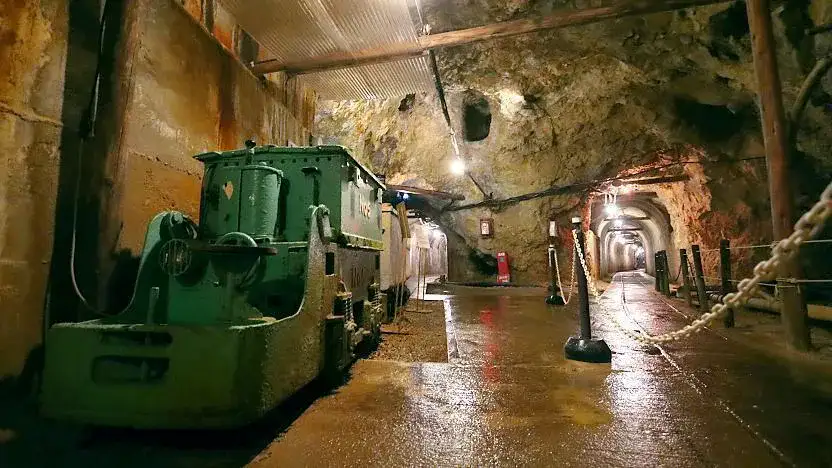
The Doyu Mine is the more modern of the two open mines. Machine-dug in 1899, parts are preserved as they were when operations ceased in 1989. The walking course first goes through a mining tunnel that meets a miniature train system and a cavity where mining occurred. Visitors then exit the tunnel to a workshop with tools and machinery from the mine's final years.
From the workshop, a 200-meter uphill walk leads to a small shrine dedicated to an important former mine director and an observation deck with close-up views of Doyu no Warito, the symbolic mountain peak split and hollowed by mining. Doyu is named after one of the first gold ore veins discovered on Sado, and mining there continued into modern times.
Visitor information
Practical details to check before planning this stop.
- Hours
- 8:30 to 17:00 (entry until 16:30)
- Closed
- December 29 to January 3
- Admission
- 500 yen (~$3.2)
- English name
- Sado Kinzan
- Original name
- Sado Kinzan Gold Mine
Verify details before visiting. Currency conversion is indicative and may vary over time.