
What to know
For most of the Edo Period (1603-1868), the rulers of Japan prohibited almost all interactions with foreign countries. When the period of isolation ended in the 1850s, Yokohama was one of only a few port towns where foreign traders, looking to profit from the newly opened country, were permitted to reside. While the Chinese made themselves a Chinatown , Westerners took up in the hills of the Yamate area, which was also called "The Bluff".
The Yamate area (山手) retains a number of sites relating to its history as the main residential district of Westerners in Yokohama. However, because of the Great Kanto Earthquake, few of them predate 1923. Today Yamate remains a hilly residential area with some pleasant parks. As visitors walk between Yamate's sites of interest, they will see by the international schools and churches that the presence of foreign residents continues to this day.
Yamate has a number of parks within walking distance from each other. The largest is the Harbor View Park , which is named after the view that the park affords onto the water and the Yokohama Bay Bridge. On the park grounds one can find some of the area's preserved Western buildings. Mostly former residences, the buildings are open to the public and most have been furnished in their original style.
Below the hills of Yamate is the Motomachi shopping street , which runs parallel to the Nakamura River. The street served the needs of the first foreign residents of Yokohama and introduced many products to Japan. Nowadays the street does not differ drastically from other shopping streets, but it still has a certain European feel. There is a large number of higher end fashion shops, as well as cafes and restaurants. The street runs 500 meters and is pedestrian-only on weekends and national holidays from 12:00 to 18:00.
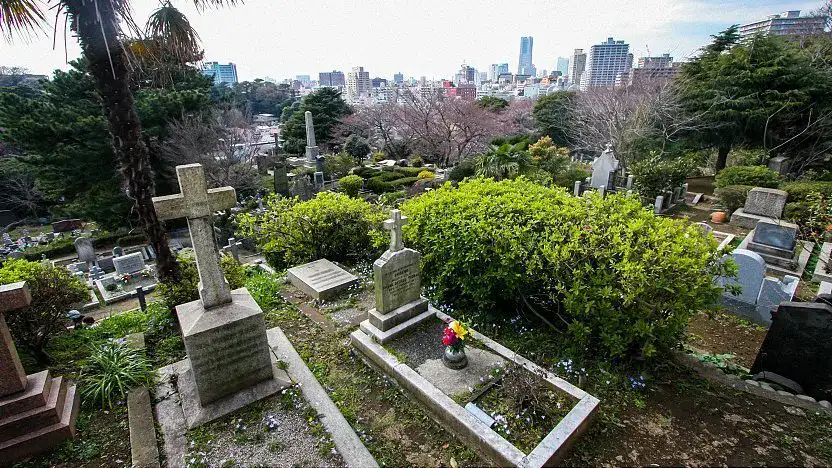
The Foreigners' Cemetery dates back to 1854, when Commodore Perry (the American navy officer who forced Japan to open its ports) buried one of his sailors on a hill overlooking the water. A few months later, a couple of Russian sailors were buried as well.
In 1861, it was designated as a cemetery for foreigners. Today, a small section of the 4200 graves can be visited, and the inscriptions often offer an interesting glimpse into the life of the interred. A small, informative museum is located beside the entrance. The cemetery is open only from 12:00 to 16:00 for a 500 yen donation on weekends and national holidays except in January and August when it is closed everyday.
Visitor information
Practical details to check before planning this stop.
- Hours
- 9:30 to 17:00
- Closed
- 4th Wed of the month (or Thu if Wed is a holiday ), Dec 29 to Jan 3
- Admission
- Free
- English name
- Motomachi Shopping Street
- Original name
- Yamate and Motomachi
Verify details before visiting. Currency conversion is indicative and may vary over time.