
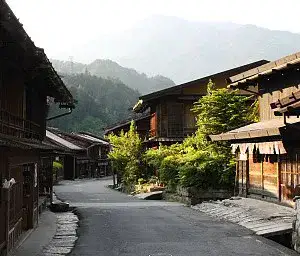
While many of Japan's historic buildings and districts have been lost to fires, earthquakes, wars, and urban redevelopment, some cities and towns have managed to preserve a street block or an entire district of traditional buildings for residents and tourists to enjoy today. The list below introduces some of Japan's best preserved historic city districts and towns:
related places
34Former Castle TownA few lanes lined with white walls and wooden gates of former samurai mansions are beautifully preserved in the Jokamachi district of Hagi today. Some houses are open to the public.Former samurai districtsSamurai DistrictA beautifully preserved samurai district with several former samurai mansions open to the public. Kakunodate's samurai district is famous for its many weeping cherry trees.Former samurai districtsNagamachiNarrow lanes and old mansions are preserved in Nagamachi, one of Kanazawa's former samurai districts. Kanazawa was the capital of the Edo Period's second wealthiest feudal domain.Former samurai districtsKitsukiKitsuki is unique for having two samurai districts on hills sandwiching a merchant district in the valley between them. They are among the most pleasantly preserved samurai districts in Japan.Former samurai districtsOld TownThe highlight of Tsuwano's old town is the Tonomachi district, where one street block of the former samurai district is particularly nicely preserved with earthen walls, historic buildings, and a water canal filled with carp.Former samurai districtsSamurai DistrictThe preserved area of Usuki's samurai district is small but photogenic. Referred to as Nioza Historical Road, it is about 200 meters long.Former samurai districtsSamurai DistrictSome of Matsue's former samurai mansions have been preserved along the busy road north of Matsue Castle. Among them is the former residence of Lafcadio Hearn.Former samurai districtsOld TownThe narrow streets in Takayama's old town are lined with traditional buildings, shops, and sake breweries. A few former merchant homes are open to the public.Former merchant districtsCanal AreaNumerous warehouses are preserved along a willow-lined canal. Many of the warehouses have been converted into museums, souvenir stores, boutiques, and cafes.Former merchant districtsYokaichi Old TownA 600-meter-long street lined with preserved buildings from the era when the small town of Uchiko on Shikoku gained international fame and wealth as a wax producer.Former merchant districtsOmi HachimanIn the old days, merchants from Omi Province in today's Shiga Prefecture were known nationwide for their business skills. Their hometown, Omi Hachiman, preserves a pretty old district around a picturesque canal.Former merchant districtsFukiya VillageA nicely preserved village known for bengara color pigment extracted from nearby copper mines. Part of its appeal is the village's remote location in the mountains, one hour outside central Takahashi.Former merchant districtsImaicho TownRather than just a district, Imaicho is a whole town whose machiya townhouse-lined streets have been preserved. A couple of merchant houses are open for tourists to enter.Former merchant districtsNaramachiNaramachi is the former merchant district of Nara, where several traditional warehouses and residential buildings have survived. One old residence is open to the public for free.Former merchant districtsWarehouse DistrictMore than a dozen massive warehouses, reminiscent of the Edo Period, are preserved along Kawagoe's main street. Many of them now house stores and restaurants.Former merchant districtsSawara TownA former transport hub for rice shipments into the capital, Sawara's historic center lies along a canal lined by a few preserved and restored traditional residences, merchant shops, and warehouses.Former merchant districtsNakamachiNakamachi-dori is a street lined with several nicely preserved old buildings, including a number of warehouses. Some of them house small shops, restaurants, and ryokan.Former merchant districtsGionGion's Hanami-koji Street and Shirakawa area are lined with beautiful old buildings, tea houses, and restaurants. In the evenings, you may be able to spot a geisha apprentice.Geisha districtsHigashi Chaya DistrictKanazawa has multiple geisha districts with several old tea houses, where geisha still perform at banquets today. Two tea houses are open to the public.Geisha districtsTsumagoA beautifully preserved post town along the old Nakasendo, with most of the town's buildings dating back to the Edo Period, when they served as lodgings and restaurants.Post townsMagomeAnother nicely preserved post town, about 10 kilometers south of Tsumago along the old Nakasendo. The two towns are connected by a nice hiking trail.Post townsOuchijukuOuchijuku is a post town along the Aizu-Nishi Kaido trade route, which connected Aizu with Nikko during the Edo Period. It is located about 20 kilometers south of Aizu-Wakamatsu.Post townsNaraiThe wealthiest former post town in the Kiso Valley, Narai stretches over a whole kilometer. Unfortunately, vehicular traffic is not banned along the street.Post townsHigashiyamaThe narrow streets ascending the slopes to Kiyomizudera, one of Kyoto's most popular temples, are lined with many old buildings, shops, and restaurants.Pilgrimage townsOharaimachiOharaimachi is the old street leading to the Inner Shrine of Ise. It is lined with many Edo Period style buildings, some of which are originals while others are reconstructions.Pilgrimage townsOgimachi VillageThe largest village in the mountainous Shirakawa-go region of Gifu Prefecture, Ogimachi preserves many massive gassho-zukuri farmhouses in its village center and an adjacent open-air museum. The best way to experience the village is to overnight at one of the farmhouses.Farming townsAinokura VillageAinokura is a remote small village in Gokayama with several gassho-zukuri farmhouses. Some of the houses serve as minshuku where tourists can experience an overnight stay.Farming townsSuganuma VillageSuganuma Village is a small collection of gassho-zukuri farmhouses in the remote Gokayama region of Toyama Prefecture.Farming townsMiyamaMiyama is a rural town in the mountains north of Kyoto. It features over two hundred thatched roof houses scattered across its idyllic countryside. Miyama's Kayabuki no Sato village records the highest percentage of thatched roof buildings of any town in Japan.Farming townsTomonouraTomonoura is a picturesque port town situated on a bay in Hiroshima Prefecture facing the Seto Inland Sea. It features an endearing fishing townscape and an old town center with many photogenic alleys lined by rustic old houses. In the past, merchant ships traveling along the Seto Inland Sea would dock at Tomonoura while waiting for a favorable tide.Port townsIneIne is a unique fishing town of "boat houses" (funaya) located around a pretty bay. The houses traditionally incorporate garages for boats on their first floors and residential space on the upper floors.Port townsHonjima IslandKasashima Town on Honjima Island in the Seto Inland Sea preserves several buildings from the Edo Period. Honjima's former inhabitants controlled trade traffic across the Seto Inland Sea from the strategically well-situated island.Port townsYunotsu OnsenYunotsu is now a pleasantly old-fashioned hot spring town along the calm Sea of Japan coast. A few centuries ago, the town's port saw large amounts of silver from the nearby Iwami Ginzan silver mines shipped out.Port townsTaketomi IslandThe small village consists almost entirely of traditional-style, one-story houses with red tiled roofs, stone walls, ample lion-like shiza statues, and white sand roads.Ryukyu villages