
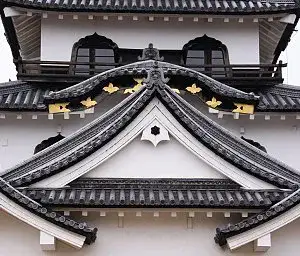
Fortifications have existed in Japan since ancient times, but the need for castles grew in the 15th century as central authority weakened and the country descended into the chaotic Warring States period (Sengoku Jidai). During this era, Japan was divided into dozens of small, warring states, each building small mountaintop castles for defense.
When Oda Nobunaga reestablished central authority in the late 16th century, and Toyotomi Hideyoshi completed unification, larger castles were built across the country. Unlike earlier mountain fortresses, these were constructed on plains or low hills, serving as administrative and military centers and symbols of power. They became the nuclei of castle towns.
After the feudal era ended in 1868, many castles were destroyed as unwanted relics of the past or lost during World War II. Only about a dozen "original castles"—those with a main keep dating from before 1868—survive today. In recent decades, several dozen castles have been reconstructed, mostly using concrete rather than traditional materials.
A typical castle featured multiple defensive rings: the honmaru (main circle) at the center, surrounded by the ninomaru (second circle) and sometimes additional rings. The castle tower stood in the honmaru, while the lord usually resided in a more comfortable palace within the honmaru or ninomaru.